
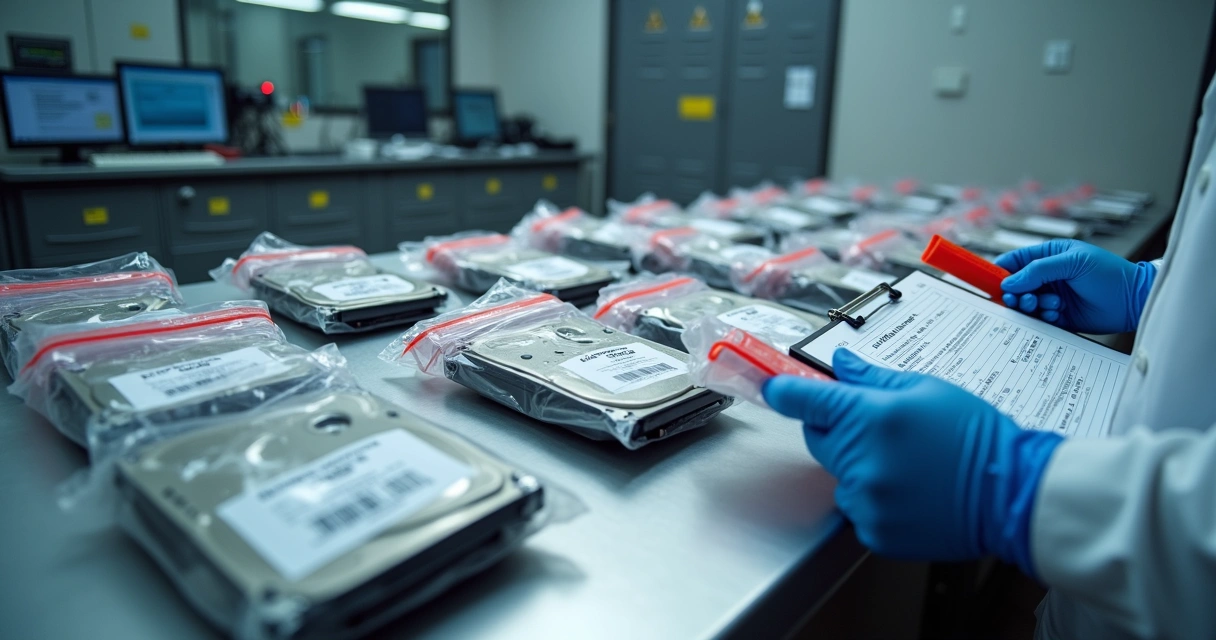
In my work with organizations and at events like those led by Thiago Vieira, I am always surprised by how often the fundamentals are overlooked—especially when it comes to the handling of digital evidence. For all the advanced technologies and methods, nothing undermines an investigation faster than a broken chain of custody. Today, I want to share what I’ve learned about the foundation of digital investigations: how to keep digital artifacts trustworthy, from the very first moment of discovery to the final courtroom presentation.
What is chain of custody in digital forensics?
The chain of custody is the documented and unbroken process demonstrating that digital evidence has remained intact, authentic, and accounted for at all times during an investigation. This concept is not just a buzzword—it’s the difference between a case standing or collapsing under legal scrutiny.
Every movement, every analysis, every handoff between professionals gets logged. This provides an auditable trail from collection to presentation. Without this, it becomes almost impossible to guarantee that evidence hasn’t been altered or tampered with—intentionally or not.
The American Public University lays out that “even minor mistakes in documentation or handling can render critical digital evidence inadmissible, risking the loss of prosecution and letting cybercriminals walk free.” That sounds dramatic, but I have seen it firsthand in my fieldwork.
The critical stages of evidence handling: a step-by-step guide
Thinking in terms of a strict physical process can be helpful. Digital evidence might be intangible data, but it’s just as susceptible to loss, contamination, or outright manipulation as a physical crime scene. Here’s how I structure the handling of evidence in every incident response:
-
Identification – The process begins the moment an IT professional or a forensic specialist identifies a potential source of evidence. This could be a log file, a hard drive, a cloud backup, or even a router.
-
Documentation and labeling – Each item of evidence gets a clear, unique identifier. This often includes date, time, seizure location, type of device or data collected, and the name of the collector. Proper documentation is your first—and sometimes only—chance to prevent confusion later.
-
Secure collection and preservation – The actual collection must avoid any alteration. For example, making bit-for-bit forensic images of hard drives, using write-blockers, and maintaining images in read-only formats. Only authorized personnel should be involved, and their names go into the logbook.
-
Storage in a secure, controlled environment – After collection, the evidence is held in a physically and logically secure location. I often recommend tamper-evident bags or secure digital vaults. All access must be restricted and tracked.
-
Logging and chain transfer – Every movement—whether that’s between investigators or between offices—goes into a detailed log. Time, date, purpose, and authorizing authority are all included. If evidence is moved for analysis or court submission, that transfer is recorded as well.
-
Final disposition or return – Once the investigation closes, evidence must be formally logged out and either returned or securely destroyed, according to policy and legal authority.
Lose track of one step, and all previous careful work can be undone.
These are not just bureaucratic steps; they are the safeguards that keep the entire investigation credible. I always make sure clients and trainees understand this—whether we’re working with USB drives or entire virtual server backups.
The role of documentation and technology in preserving evidence
One challenge I have come across repeatedly is the sheer difficulty of logging and documenting every interaction with digital evidence. It is time-consuming but necessary. Technology can actually make this easier—digital logging systems can automate timestamps and access control. According to the Digital Preservation Coalition’s handbook, “the digital forensic workflow is designed to be accountable, repeatable, and defensible, reducing risks of inadvertent modification.”
In my research and consulting work, I recommend that organizations adopt tools that integrate digital signatures, hash verification, and access receipt logs into their process. This is especially relevant in corporate investigations, where multiple parties might need access for various reasons.
- Clear entry and exit logs for all evidence
- Regular integrity checks using cryptographic hashes
- Photo or video documentation of physical hardware “as received” and “as released”
- Automated alerts for access attempts
Any system—manual or digital—should ensure that evidence cannot be silently accessed or changed without detection.

Common threats and challenges in managing evidence
Even with strong protocols, various obstacles can threaten the reliability of custody for digital evidence. I have seen three major problem areas over my years in the field:
-
Human error: Forgetting to log entries, incorrect documentation, using the wrong version of a hashing algorithm, or even just mislabeling a drive.
-
Technological risks: Failures in automated logs, corrupted files, insufficient backup of logs, or vulnerabilities in access control systems.
-
Tampering or contamination: Unintentional or intentional changes made by people with too-broad access, or malware introduced to analysis workstations.
In one case, I witnessed how a simple typo in logging the serial number of a confiscated laptop led to courtroom confusion and questions about whether the evidence had been swapped. The evidence itself—the hard drive’s data—was perfectly preserved, but the documentation gap created huge doubts.
Studies from Zenodo confirm these findings, pointing out that traditional practices lack transparency and are prone to both accidental mistakes and deliberate wrongdoing. As digital evidence becomes more widespread, these gaps only become more glaring.
Best practices for strong custody of digital evidence
So how do organizations and professionals keep the process reliable? In my work with Thiago Vieira’s lectures and consulting, I always recommend implementing these best practices:
- Employ tamper-evident seals for all physical evidence containers
- Require digital signatures or biometric access for releasing or receiving evidence
- Run regular integrity checks with hash comparison after every custody transfer
- Limit access only to authorized personnel, with role-based controls
- Train every team member in basic documentation and error recognition
- Back up logbooks (physical or digital) in secure offsite locations
- Test your processes with mock incidents to reveal potential failure points
Best practices thrive when they’re routine—not just emergency measures.
For more details, I recently wrote on this subject on my profile at Thiago Vieira’s blog, including some checklists and flowcharts that can help teams develop process discipline.
Legal consequences: why custody matters in every court
Legal standards depend on being able to demonstrate, in court, how evidence was handled. An entire case can unravel if you can’t show who had access—or if documentation has gaps. As the article from American Public University describes, “a broken chain can make digital evidence inadmissible, with far-reaching impacts for victims and organizations.”
In my lectures, especially when I address legal professionals and IT staff together, I use real court examples to highlight this risk. A simple failure to sign a logbook or a file hash that doesn’t match up can introduce doubt, and defense teams are quick to exploit those weaknesses. On several occasions, I have referred to practical case studies that highlight these breakdowns, sharing what was lost and why.
Comparing court perspectives: Portugal vs. Brazil
This topic always raises good questions at workshops. In Portugal, courts focus heavily on formal certification and documented processes. Every step is expected to be witnessed or attested. In Brazil, the chain is also mandated by law, but sometimes the processes are less formalized in local courts, which can increase the risk of subjectivity in evidence acceptance or exclusion. In both systems, however, even a small break can put a case in question. Judges rely on forensic specialists to explain and defend the custody process; if we cannot, the evidence may be excluded entirely.
Responsibility and accountability during incident response
Drawing from my real-life cases and those I discuss with audiences at events, responsibility for evidence handling sits with every professional who comes in contact with digital artifacts—from the first responder to the final analyst.
Key responsibilities include:
- Documenting every step and every handoff
- Challenging colleagues who skip steps or attempt shortcuts
- Flagging potential issues with documentation immediately
- Staying current on training and legal requirements
Every person in the chain becomes part of the evidence’s story. If one link fails, the whole chain is questioned. In my opinion, ongoing training and regular audits—both internal and external—are the most powerful tools for building a reliable digital evidence process.

Examples from corporate and digital crime investigations
In one investigation at a multinational company, an external hard drive was discovered with suspicious files. The IT security team followed a step-by-step procedure: photographs at the collection site, detailed log entries, signatures at every transfer, and hash verification after each step. Because of this, the evidence was accepted by the court without issue, even when challenged by the defense.
Contrast this with another case I reviewed: a Bitcoin wallet was seized in a fraud case, but the first responder failed to hash the disk until days later, and no record existed of who accessed the drive in that period. The result? The evidence was dismissed, and the investigation stalled. Incidents like this show the practical impact—something I emphasize during discussions on lawful evidence handling.
Where to learn more and the path to readiness
With technology growing in complexity and attacks evolving, there is never a bad time to revisit your procedures or ask for expert advice. At Thiago Vieira’s events, I consistently share curated articles, tips, and the latest research—some are also available by searching on my evidence-focused archives, which can be a great starting point for digital forensic specialists and corporate teams alike.
Conclusion: why chain of custody is your best defense
Every digital forensics case is only as strong as its evidence process—from collection through final disposition. The methods, technologies, and care invested in managing and documenting each interaction are what truly protect both the justice process and the organization or individual involved.
If you want to deepen your knowledge or bring your team up to speed, consider following the latest insights and best practices shared by myself and experts like Thiago Vieira. Discover more about our approach and see how you or your business can build better defenses against evolving digital threats. Keep learning, keep your chain intact, and you’ll always be one step ahead.
Frequently asked questions
What is digital forensic chain of custody?
Digital forensic chain of custody is the documented sequence of control, transfer, and handling of digital evidence from the moment it is collected until its presentation in court or final disposal. This record proves the evidence wasn’t altered or accessed by unauthorized persons, maintaining its reliability and admissibility.
Why is maintaining chain of custody important?
Without a complete trail of who accessed, transported, or analyzed each piece of digital evidence, questions about tampering or contamination naturally arise. Courts require this record to trust that data remains as originally found, which protects the fairness of an investigation and upholds legal standards. Incomplete custody can result in crucial evidence being thrown out, as seen in sources like the article from American Public University.
How do you document chain of custody steps?
Every interaction with evidence is logged using a combination of physical labels, written logs, digital entries, and, where possible, photos or video. Documentation should include:
- Date and time of each custody event
- Identity and role of each person involved
- Description and serial number of the item
- Reason for transfer or access
- Verification using digital signatures or hash values when applicable
Modern solutions also add cryptographic verification and automated alerts to detect improper access. The Digital Preservation Coalition’s handbook recommends these practices for defensible forensic workflows.
What are common chain of custody mistakes?
Frequent mistakes include incomplete or missing logs, failing to hash evidence at collection, not securing evidence physically or digitally, neglecting to use tamper-evident containers, and allowing unauthorized people access. Even small oversights such as typos or skipped signatures can have huge legal consequences and can jeopardize cases, as shown in research from Zenodo.
Who is responsible for chain of custody?
Everyone who comes into contact with digital evidence during an investigation is responsible—this includes first responders, IT staff, forensic analysts, legal teams, and even evidence custodians. Each person becomes a “link” in the chain, and any gap in their documentation or procedure can affect the credibility of the whole process.