

In my years working with business leaders and technology professionals, I’ve watched cybersecurity shift from a concern of IT departments to a boardroom priority. Recent data is even more alarming: USAFacts summarizes FBI Internet Crime Complaint Center data showing a record 859,532 cybercrimes in 2024, and financial losses jumped 30% to over $16.6 billion in the US alone. Decision-makers know the risks, but many still hesitate to act decisively. I understand these hurdles, and I believe expert-led, consultative selling—offered by experienced professionals like myself and those in the field of Thiago Vieira—can bridge this gap.
Throughout this article, I’ll share seven proven tactics to increase cybersecurity sales, not just for quick wins, but to deepen client trust and create lasting, mutually valuable partnerships. My approach is grounded in real-world scenarios, quantifiable risk, and clear return on investment (ROI). If you want to differentiate your approach and truly make cybersecurity a core business value for your clients, these are the steps that deliver.
1. Quantify risks with real scenarios
Business decision-makers rarely respond to vague warnings. In my experience, what compels them are tangible facts, relevant stories, and numbers. That’s why my first step is always risk quantification, with examples tailored to the client’s vertical and size.
If you’ve run a phishing simulation for a client and 22% of employees clicked, it’s powerful to translate that risk: “Almost a quarter of your workforce is just one bad email away from granting access to your network.” Demonstrating with data, like losses reported in the FBI’s annual cybercrime round-up, makes the conversation feel urgent and real.
Common ways I quantify risk:
- Risk assessments comparing industry benchmarks
- Phishing and social engineering tests
- Cost projections of downtime based on public incident data
- Case studies showing similar-sized companies impacted by attacks
Numbers make the threat clear—and the business case undeniable.
Oftentimes, I’ll recount situations addressed in Thiago Vieira’s talks, which focus on practical examples and effective digital resilience strategies. This connects abstract risk scenarios to experiences the audience can picture, moving them closer to action.
2. Link security to financial impact
Strong stories and statistics build awareness, but the final nudge comes when cybersecurity is directly attached to the bottom line. A breach is not just an IT incident; it’s a business event with serious financial consequences. Whenever I offer recommendations to executive teams, I tie risk to costs through both direct and indirect effects:
- Losses from ransomware payments or stolen funds
- Legal and regulatory penalties
- Business interruption and lost sales
- Loss of client trust and reputation damage
According to USAFacts’ summary of FBI data, US businesses suffered a leap in damages—up to $16.6 billion last year. This isn’t hypothetical; these numbers prove the cost of inaction is rising every year. If you make it clear what’s at stake, people start seeing security as a priority.
My proposal presentations always include a table of estimated cost avoidance, side by side with solution investment, so the financial case is as clear as the technical justification.
3. Position managed security as a partnership
I’ve seen the shift firsthand: clients are not just asking for “products.” They want ongoing help, advice, and fast response in a crisis. That’s why I always focus on managed cybersecurity services (MSS). More and more, decision-makers want:
- 24/7 monitoring and threat detection
- Rapid incident response when something goes wrong
- Regular risk assessments and security awareness training
- Compliance reporting done automatically
For me—and in alignment with experts like Thiago Vieira—selling MSS is not about a single transaction. It’s about building a relationship. I position myself as someone ready to guide, respond, and educate not just once, but continuously.
Security is a core business investment, not an afterthought.This mindset resonates especially as you present your services to organizations lacking their own cybersecurity staff. As HKCERT’s 2025 outlook shows, almost 30% of enterprises still have no dedicated cybersecurity leaders. They need a partner.

4. Show clear ROI and automation-driven savings
Every C-level leader knows the budget is finite. That’s why my proposals never fail to include concrete calculations for return on investment (ROI) and cost savings. Whenever possible, I:
- Highlight reduced manual workload through security automation (such as patching, backup, alerting)
- Point out lower risk of compliance fines
- Estimate fewer downtime hours and recovered productivity
- Compare cost of managed service to cost of hiring dedicated personnel
I once worked with a client who hesitated over a monthly managed security fee. By breaking down the time their staff spent chasing malware infections—and translating that into billing hours lost—they quickly saw that managed services would pay for themselves in less than a quarter. These numbers speak to decision-makers more than technical jargon does.
Automation doesn’t just strengthen defenses—it saves money and time, too.This approach is backed up by APQC’s global research with business leaders, showing that organizations who fully integrate cybersecurity into enterprise management detect incidents sooner and recover faster. I always cite these kinds of studies when showing a skeptical CFO the business benefit of smarter, managed service offerings.
5. Address objections: cost, complexity, and trust
Objections are part of every sales process, but I see them as opportunities to add value. In cybersecurity, I most commonly encounter three types:
- “It’s too expensive.”
- “It seems too complicated for our small team.”
- “How do I trust you with our data?”
Here is how I respond:
- Cost: I focus on the “cost of not acting.” Real examples show that the loss from a single data breach or ransomware event dwarfs the annual investment in protection. Often, basic services catch easy problems before they become expensive disasters.
- Complexity: I break solutions into phases and show how automation reduces manual effort. For clients with lean staff, I point to managed services as a turnkey answer that keeps their workload stable.
- Trust: I share testimonials, detail my certifications, and offer transparency about my process. For more, I encourage clients to review the Thiago Vieira background and expertise, reinforcing a record of reliability and skill.
Good answers to objections don’t push—they reassure.
6. Sell through consultative, personalized solutions
Cookie-cutter packages rarely meet client needs. Over the years, I have learned that discovery sessions and workshops—where I ask open questions, listen, and analyze unique environments—are magnetic for sales success. I always come prepared with tailored proposals, including:
- Custom risk profiles and controls mapped to the organization’s structure
- Recommendations for quick wins (like user awareness training) and longer-term roadmap items (like SOC-as-a-service)
- Clear explanations of how each measure addresses their business needs
I connect my consultative method to the kind of insightful talks and sessions delivered by Thiago Vieira, who focuses on answering tough, practical questions for audiences across sectors. By tailoring my message—much like he does for his audiences—I find decision-makers eager, rather than hesitant, to discuss next steps. If you need more ideas for engaging conversations or educational session content, reviewing the examples of digital resilience shared in our educational library can be enlightening.
7. Share success stories and prove ongoing value
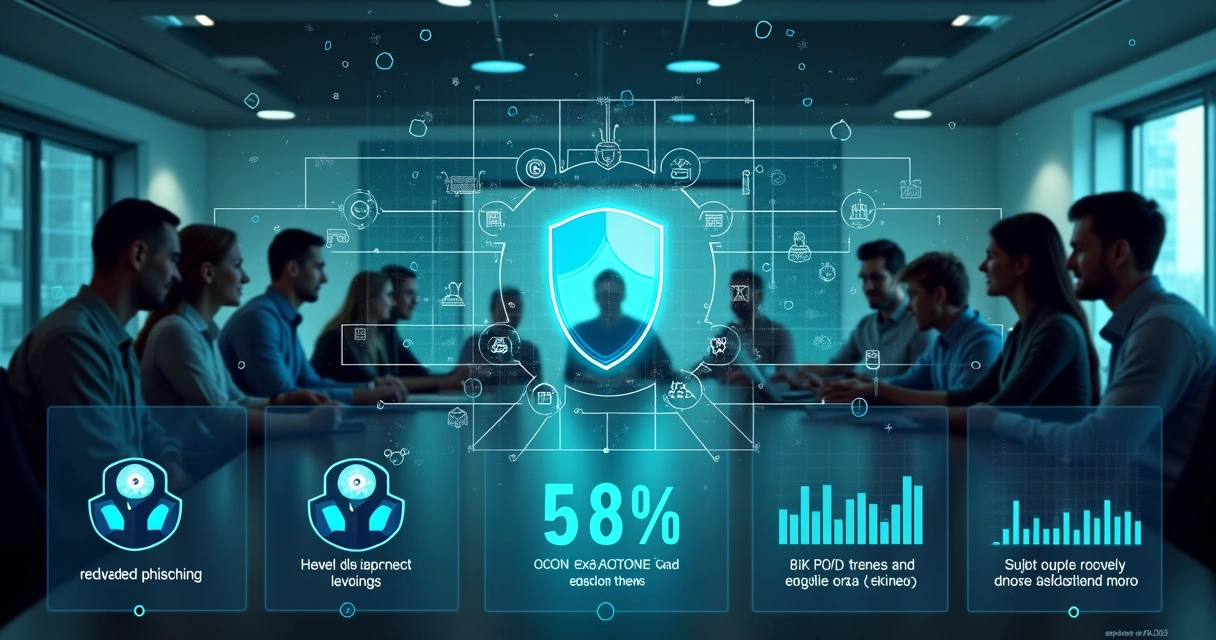
The strongest weapon in my toolkit is a real, measurable story. If I can show how a retail client cut phishing incidents in half or how a manufacturing client returned to normal in under 24 hours after a ransomware scare, prospective customers feel confident choosing my team.
When sharing case studies, I always:
- Describe the problem and initial risk
- Outline the solution delivered (without jargon)
- Present before-and-after statistics: attacks blocked, recovery speed, user error rate reduced, ROI realized
- Quote feedback from business leaders and IT managers involved
If you would like to see how I break down these improvements, you’ll find several practical walk-throughs in our resource center on incident response and prevention.
Building trust: transparency, communication, and readiness
Finally, none of these tactics matter if trust isn’t present. Every organization I meet—whether at a major international summit or a local business forum—asks variations of the same question: “Will you be there when it matters most?”
Here’s how I work to earn trust and encourage others to do the same:
- Be transparent about processes and pricing
- Communicate in plain language, without scare tactics
- Openly share frameworks for incident response and recovery planning
- Commit to regular reporting and scheduled client reviews
- Encourage ongoing learning with educational materials, much like those found on the Thiago Vieira searchable learning portal
Conclusion: Turn cybersecurity into a lasting business value
Throughout my career, I have seen that succeeding in cybersecurity sales is not about simply “selling more.” The real goal is to become a true advisor, partnering with organizations to reduce their risk, enhance resilience, and defend their reputation—today and tomorrow. By quantifying threats, linking risks to financial reality, demonstrating long-term value, and prioritizing open communication, I have helped clients see cybersecurity not as a cost, but as an investment in their future.
If you’re ready to discover how our expert-led, practical approach—like the one at the heart of Thiago Vieira’s project—can benefit your own team or business, I invite you to start a conversation. Review our resources, join an upcoming educational event, or contact us for a personalized session. The digital world grows more challenging each year; let’s make security your advantage, not your worry.
Frequently asked questions
How do I attract more cybersecurity clients?
To attract new clients for cybersecurity services, I focus on educational content and direct outreach tailored to business leaders' concerns. Hosting webinars, sharing relevant case studies, and creating practical guides makes your value clear. Referral programs, engaging social media posts, and partnerships with industry experts (like those involved in Thiago Vieira’s projects) help expand your reach among decision-makers. Position yourself as a thought leader by submitting materials to community blogs or platforms such as our searchable online portal.
What are effective cybersecurity sales tactics?
I have found the best tactics are: quantifying client risk with specific data, connecting solutions to financial outcomes, focusing on managed security partnerships, addressing objections honestly, personalizing every proposal, and sharing real success stories. All of these build credibility and meet business leaders where they are, echoing strategies highlighted in recent global risk management studies.
How to price cybersecurity services competitively?
The key is transparency and benchmarking. I recommend creating service tiers based on clear deliverables: core (like monitoring and assessment), advanced (quick incident response, deeper analytics), and premium (integrated compliance, automation, regular reviews). Compare against public benchmarks, calculate the cost of similar internal hires, and always highlight cost savings and ROI—especially through automation. Be clear about what’s included and remain open to customizing packages for different client needs.
Is cybersecurity service upselling worth it?
Yes, upselling is valuable when done consultatively. If you help clients see the added value—such as from security automation, advanced monitoring, or response planning—they are likely to upgrade. The best upselling happens after initial trust is built and ongoing reporting proves the benefits of expanding coverage. Always focus on real needs, not on pushing irrelevant add-ons, drawing from the consultative educational style I see in Thiago Vieira’s presentations.
Where can I find cybersecurity customers?
Cybersecurity customers are found where risk is rising and expertise is scarce. Look at small to medium enterprises without in-house cybersecurity teams, organizations in regulated sectors (healthcare, finance), and businesses recently affected by incidents. Attend industry-specific events, join online forums, and collaborate with thought leaders like those featured in our incident response case studies. Networking, content marketing, and educational events are proven paths to new business in this field.