

When I first started following the new European rules for artificial intelligence, I noticed that many security teams were asking the same question. What does this change in real work, during a real incident, with real pressure on the clock? That is where the discussion becomes useful. The EU AI Act is not just a legal topic. It changes how I think about risk, response, accountability, and trust in digital systems.
The EU AI Act creates a risk-based legal framework for AI systems, and that directly affects cybersecurity teams, vendors, and corporate governance.
In my experience, many organizations still treat AI compliance as a future issue. I think that is a mistake. Security leaders already deal with automated detection, fraud screening, user behavior analytics, identity checks, and triage tools that rely on AI or similar logic. If those systems fall under the European framework, the company may need records, controls, human oversight, and a clear response plan long before a regulator asks for them.
This matters even more in cybersecurity because AI tools can make fast choices during a threat. They may block accounts, score behavior, flag insiders, or rank incidents. A bad decision can hurt people, disrupt operations, or create legal exposure. That is why the new regulation deserves close attention from CISOs, compliance officers, legal teams, product teams, and incident responders.
Risk comes first.
What the law is trying to do
The main goal of the European AI regulation is to allow innovation while setting limits for unsafe or harmful AI uses. I see it as an attempt to separate acceptable systems from those that need tighter control. The law focuses on risk to health, safety, and fundamental rights, but its effect reaches security practice because security teams often manage systems that watch, predict, classify, or trigger action.
The law does not treat all AI systems the same. It sorts them by risk level and applies stronger duties where harm could be greater.
That structure makes sense to me. A simple chatbot used for low-impact tasks will not face the same burden as a system that influences hiring, access control, identity verification, or critical infrastructure protection. In corporate and technology settings, this difference is very practical. It tells teams where to spend time first.
According to the European Commission timeline for the AI regulatory framework, the rules entered into force on 1 August 2024, with full application by 2 August 2026. The same timeline shows that prohibitions and AI literacy duties start on 2 February 2025, while governance rules and obligations for general-purpose AI models apply from 2 August 2025. I find these dates helpful because they show that waiting until 2026 is too late.
How the risk categories work
To prepare for compliance, I first need to understand the basic categories. The framework generally groups AI uses into unacceptable risk, high risk, limited risk, and minimal risk. Each one changes what a company must do.
Unacceptable risk covers uses that are banned. These are practices the law sees as too harmful to permit. Security teams should pay attention because aggressive surveillance or manipulative uses could cross a line if deployed without care.
High-risk systems are the ones that usually demand the most work. In business and technology environments, these may include AI involved in biometric identification, access to services, employment decisions, critical infrastructure, or security functions tied to serious outcomes.
Limited-risk systems mostly trigger transparency duties. A user may need to know they are interacting with AI, or that content has been generated or altered.
Minimal-risk systems have fewer legal duties, but I still would not ignore them. A low-risk tool can still become a security problem if it is poorly trained, badly monitored, or connected to sensitive data.
For cybersecurity teams, the biggest compliance pressure usually sits in high-risk systems and in tools connected to identity, surveillance, or access decisions.
Why cybersecurity teams should care now
I have seen security programs adopt AI faster than governance can keep up. That happens because defenders need speed. They want systems that spot phishing patterns, detect anomalies, rank alerts, and identify fraud. All of that can help. Still, the law asks a hard question. Can you explain how the system works, what data shaped it, how you monitor errors, and who can override it?
If the answer is no, the issue is not only technical. It is regulatory.
Cybersecurity teams should care now for at least four reasons:
AI systems may influence high-impact decisions during incident response.
Security tools often process personal data, behavioral data, and sensitive operational data.
Automated actions can create false positives that lock out users, stop services, or escalate harm.
Audit requests may require records that many teams do not yet keep.
I think this is where the work of Thiago Vieira connects well with the topic. In talks about digital resilience, fraud prevention, and incident readiness, he often points people back to practical behavior under pressure. That same mindset helps here. Compliance is not just a folder of policies. It is the ability to respond well when the system fails, when attackers adapt, or when a regulator asks for proof.

What high-risk AI means in practice
When an AI system falls into the high-risk group, the organization cannot treat it like a simple software feature. The provider and, in some cases, the deployer need to show control over the system across its lifecycle.
High-risk AI systems require documented risk management, quality data practices, technical documentation, logging, human oversight, and post-market monitoring.
In plain terms, that means several things for a company using AI in security operations:
It must identify the system, its purpose, and where it is used.
It must map what data goes in, what outputs come out, and what decisions depend on those outputs.
It must assess foreseeable misuse, bias, drift, false positives, and failure conditions.
It must assign human review rights, override procedures, and escalation paths.
It must keep records that support internal review and possible external inspection.
I often explain this in a simple way. If an AI tool can affect people, access, trust, or continuity, I need to know who owns the risk. If nobody owns it, the company is exposed.
For teams that want a broader view of digital security thinking, I would naturally point to Thiago Vieira’s author page, where the connection between real-world cyber threats and practical communication becomes clearer.
Documentation is no longer optional
One common mistake I see is the belief that good intent is enough. It is not. If a company uses AI in a regulated context, it needs evidence. Documentation is part of the control system.
If your team cannot document how an AI system was selected, tested, monitored, and governed, compliance becomes very hard to prove.
A strong internal file should usually include:
The business purpose and legal basis for deployment.
The vendor or internal development details.
Data sources, data limitations, and retention rules.
Known risks, testing results, and acceptance criteria.
Human oversight steps and incident escalation rules.
Logging methods, review frequency, and update history.
I also think organizations should write for stress, not for calm. During a breach or fraud event, nobody wants to search through twenty vague policy files. A short control summary for responders can save time and reduce mistakes.
If you want to build internal awareness, a content hub such as the topic search page can help teams find related security guidance without forcing them into legal language from the start.
Monitoring, transparency, and incident response
In cybersecurity, monitoring is normal. In AI governance, it becomes more structured. I need to monitor not only whether a tool is online, but whether its outputs remain safe, fair, and within expected limits. That includes changes in attack patterns, data drift, prompt abuse, and unusual automated decisions.
Transparency is also more than a notice on a screen. It includes making sure users, staff, and affected people understand when AI plays a role and what type of review exists. In some settings, lack of transparency can raise both legal and trust problems.
Cyber incident response plans should now include AI-specific checks, such as output validation, model misuse review, and escalation for harmful automated actions.
When I help teams think through incident response, I suggest adding these AI-focused checkpoints:
Confirm whether the affected service uses AI in detection or decision-making.
Check whether poisoned data, prompt manipulation, or model drift may be involved.
Review logs for automated actions taken before human approval.
Assess whether personal data or sensitive inferences were exposed.
Preserve documentation for later legal and internal review.
I once watched a team spend hours on a fraud case before realizing the scoring model had changed behavior after a silent update. That kind of gap is exactly what governance should reduce.
Logs tell the story.

Data protection and AI governance meet in the same room
In my view, one of the hardest parts of the new framework is the overlap with data protection. AI systems in security often rely on user behavior, network patterns, device details, and identity signals. That means privacy and security teams cannot work apart anymore.
AI governance and data protection intersect where systems process personal data, infer behavior, or make decisions that affect individuals.
That overlap creates practical duties. Companies should review:
Whether the training or operational data includes personal information.
Whether data minimization rules are respected.
Whether retention periods are justified and enforced.
Whether access to model inputs and outputs is controlled.
Whether individuals can challenge or review harmful outcomes.
Security teams sometimes assume that more data always means better detection. I understand the instinct, but the legal and governance picture is tighter now. Data collection must have a reason. It must also be protected, logged, and reviewed.
For professionals who want practical cyber awareness material in a human tone, references like this article from Thiago Vieira’s blog can support internal learning without turning the topic into abstract theory.
Common pitfalls I keep seeing
Many compliance failures do not come from bad intent. They come from silence between teams. Product builds the feature. Security plugs it into a workflow. Legal hears about it late. Procurement saves the contract, but not the model details. Then the company says it uses AI responsibly, yet nobody can show how.
I keep seeing the same weak points:
No inventory of AI systems in use.
No risk classification process before deployment.
No clear owner for post-deployment monitoring.
No training for staff who rely on AI outputs.
No link between AI incidents and cyber response playbooks.
No vendor due diligence that covers model behavior and logging.
One of the biggest mistakes is treating an AI tool as if it were just another software plugin.
That approach fails because AI can change over time, react badly to strange inputs, and influence decisions in ways that are hard to spot without testing. This is why internal drills help. Thiago Vieira often speaks about real cases to make digital threats feel concrete. I think that same style works well for AI governance. People learn faster when they can picture the incident, not just the rule.
Penalties and business impact
Non-compliance can lead to fines, but I think the wider business effect is just as serious. A company may face blocked deployments, contract issues, public trust damage, and harder incident recovery if records are missing. In some sectors, that can be worse than the financial penalty itself.
Penalties under the EU AI framework can be severe, but the operational cost of poor governance can hurt even earlier.
That is why I advise teams to think beyond legal exposure. Ask whether the organization can defend its use of AI in front of a board, a client, a regulator, and an affected user. If the answer changes depending on who asks, governance is still weak.
A practical roadmap for companies
I prefer simple plans that teams can actually follow. For most organizations, preparation can start with a short sequence.
Create an inventory of AI systems, including vendor tools and internal models.
Classify each system by use case, data type, and possible impact.
Flag high-risk or sensitive deployments for deeper review.
Assign owners across security, legal, privacy, and operations.
Write minimum documentation and logging requirements.
Update incident response plans to cover AI-specific failure modes.
Train staff on oversight, escalation, and transparency duties.
I would also build AI literacy into security culture now, not later. The timeline already started moving. Teams need to know what these systems do, where they fail, and when a human must step in.
Additional reading can be organized through internal knowledge references such as another practical post on Thiago Vieira’s blog and a related article on digital risk topics, especially if your goal is to make technical and non-technical staff speak the same language.
Timeline and preparation window
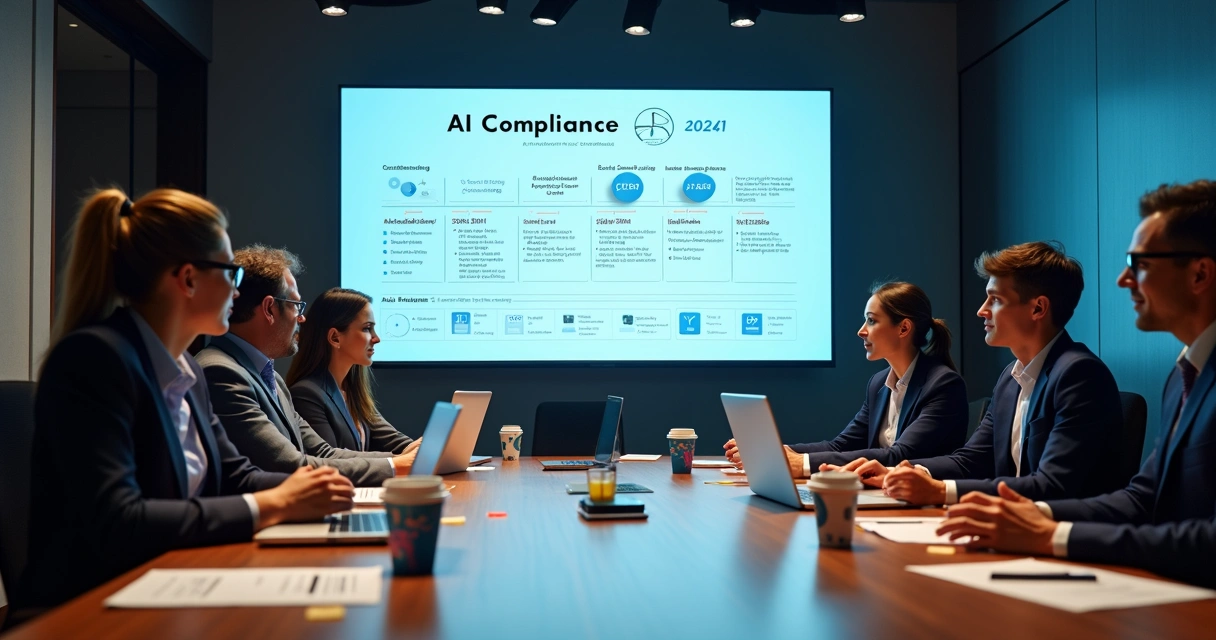
The dates matter because they shape budget, training, procurement, and rollout plans. As noted in the European Commission overview of the EU AI rules, the regulation entered into force on 1 August 2024 and becomes fully applicable by 2 August 2026. Before that, some duties arrive earlier, including prohibited practices and AI literacy obligations from 2 February 2025, plus governance rules and general-purpose AI model obligations from 2 August 2025.
The implementation timeline means companies should treat 2025 as a preparation and control year, not a waiting year.
I think the smartest approach is phased action. Start with inventory and awareness. Then move to classification, controls, and response design. After that, test whether the process works under pressure.
Conclusion
The EU AI Act changes cybersecurity because it changes what good control looks like. It asks companies to know their systems, define their risks, record their choices, and keep human oversight where harm can grow fast. I see this as a shift from informal trust in automation to structured accountability. That shift can be uncomfortable, but it is healthy.
Good AI compliance in cybersecurity means being ready to explain, monitor, and correct automated decisions before they become larger failures.
If your organization uses AI for fraud detection, threat analysis, identity checks, access control, or alert triage, now is the time to map those uses and tighten governance. If you want a practical way to build that awareness across teams, get to know Thiago Vieira and his work on cybersecurity talks and digital resilience, because clear guidance and real-world examples can help your people prepare before the pressure arrives.
Frequently asked questions
What is the EU AI Act about?
The EU AI Act is a European legal framework for artificial intelligence. It uses a risk-based model to regulate AI systems according to their possible impact on safety, rights, and trust. In my view, its main purpose is to allow useful AI while placing tighter rules on systems that can cause more serious harm.
How does the EU AI Act affect cybersecurity?
It affects cybersecurity by placing duties on AI systems used in detection, scoring, monitoring, identity checks, and automated response. Security teams may need stronger documentation, logging, oversight, testing, and incident procedures. If an AI tool can affect access, surveillance, or high-impact decisions, the compliance burden can rise.
What are the main risk management requirements?
The main requirements usually include risk assessment, documented controls, data quality review, technical records, logging, human oversight, transparency where needed, and ongoing monitoring after deployment. For high-risk uses, I would also expect clear escalation paths, testing for failure cases, and evidence that the company can review harmful outcomes.
How can companies comply with the EU AI Act?
Companies can comply by creating an inventory of AI systems, classifying risk, assigning owners, reviewing data use, building documentation, updating incident response plans, training staff, and monitoring systems after launch. I think the best results come when legal, privacy, security, and operations work together instead of treating AI compliance as one team’s problem.
Who needs to follow the EU AI regulations?
Providers, deployers, importers, distributors, and other organizations involved in placing AI systems on the EU market or using them in covered contexts may need to follow the rules. In practice, any company that develops, sells, deploys, or relies on AI in the European context should assess whether the regulation applies to its tools and workflows.