
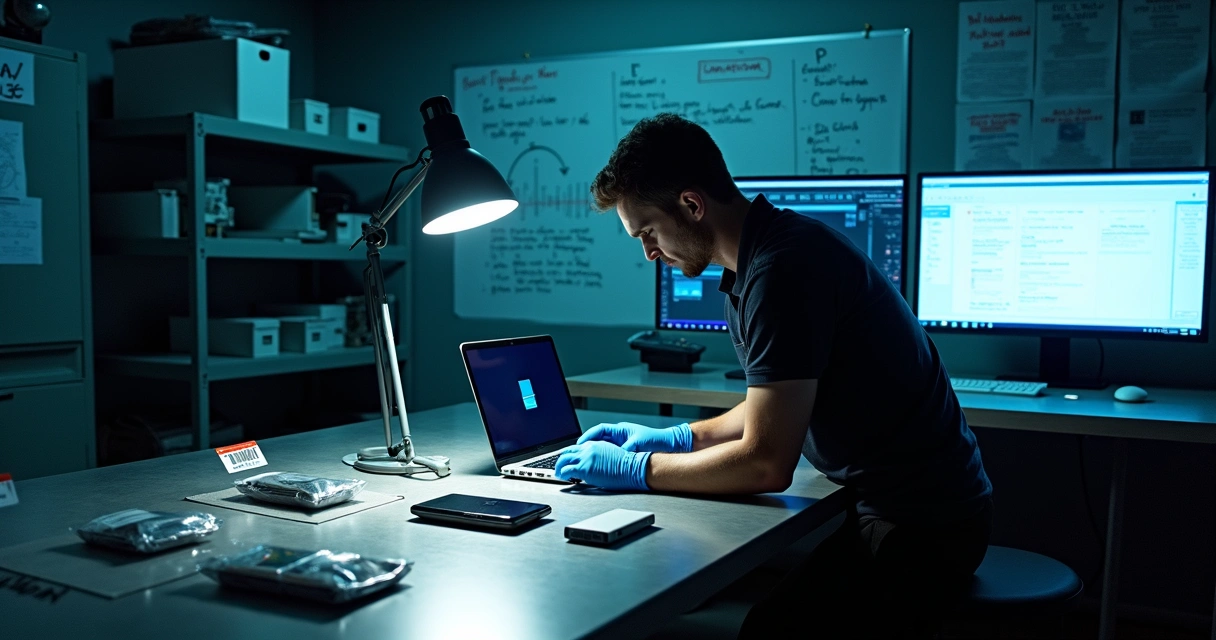
As someone who has spent years in cybersecurity, I've learned that investigating digital threats involves far more than technology alone. Today, with the surge in cyberattacks and data breaches, the need for careful investigation is greater than ever. Recent data from USAFacts revealed that in 2024, there were 859,532 reported cybercrime cases in the United States, accumulating $16.6 billion in financial losses (USAFacts cybercrime statistics). Faced with this reality, I’ve witnessed firsthand how digital forensics provides answers and can restore trust after security incidents.
In this article, I want to present a clear picture of the processes, people, and technology behind digital evidence investigations. This is designed for those interested in understanding how incidents are handled, whether you’re a tech professional, business leader, or just someone who wants to stay safe online. Along the way, I’m drawing insight from my professional experiences and referencing approaches I discuss in my own talks, much like the ones I deliver as part of the Thiago Vieira project.
The roots and growth of digital investigations
Years ago, when someone mentioned investigating a digital crime, it meant searching through emails or maybe peeking at a desktop’s files. Now, it includes everything from smart fridges logging network activity to mobile devices constantly online. I’ve watched the field adjust rapidly.
Let me explain why this field matters today. Imagine a business that finds ransomware on its servers. Sensitive data might have already left the building—without proper investigation, no one knows what, when, or how it happened. In my experience, digital investigation is a structured way to answer such pressing questions after a cyber incident.
Besides, as the National Institute of Standards and Technology points out, investigations depend on reliable methods, secure handling, and tools to make sure evidence can answer tough questions. If this process isn’t followed perfectly, the whole case could fall apart. I have seen that happen more than once—the stakes are high.
Digital forensics defined in plain words
So, what does it mean to investigate digital evidence? For me, it means collecting, preserving, and studying digital data to uncover facts. It is used in situations like:
- Uncovering who accessed confidential files inappropriately
- Identifying how ransomware entered a network
- Reconstructing email exchanges to show intent or motive
- Tracing financial fraud using online records
This work supports police, organizations, and sometimes entire industries trying to recover after a hack or insider threat.
Navigating the stages: From discovery to reporting
Whenever I train others in digital investigations or present to business leaders, I focus on the steps that professionals follow. Here’s how I usually break it down:
1. Identification of digital evidence
Any investigation starts with picking out what counts as evidence. For instance, a suspicious email, a set of log files, or hard drive contents. If you miss something here, you won’t uncover the whole story.
“Small digital traces often expose the biggest secrets.”
During this step, an investigator asks: Where might the evidence be? What systems are involved? Sometimes, data appears in unexpected places, like Wi-Fi routers or cloud storage backups. From my experience, the ability to spot valuable data—hidden or obvious—is what sets skilled investigators apart.
2. Collection: Gathering evidence without tampering
Once evidence is identified, it needs to be gathered without change. Imagine picking up a glass at a crime scene—you want only the original fingerprints, not your own. In digital evidence collection, this means creating bit-by-bit copies, documenting where they came from, and avoiding actions that could alter data.
- Creating cryptographic hashes to prove nothing changed
- Recording dates and exact locations
- Using write blockers when handling drives
- Logging every step
This phase must be handled with care. “Any alteration—intentional or by accident—can render evidence useless in court.”
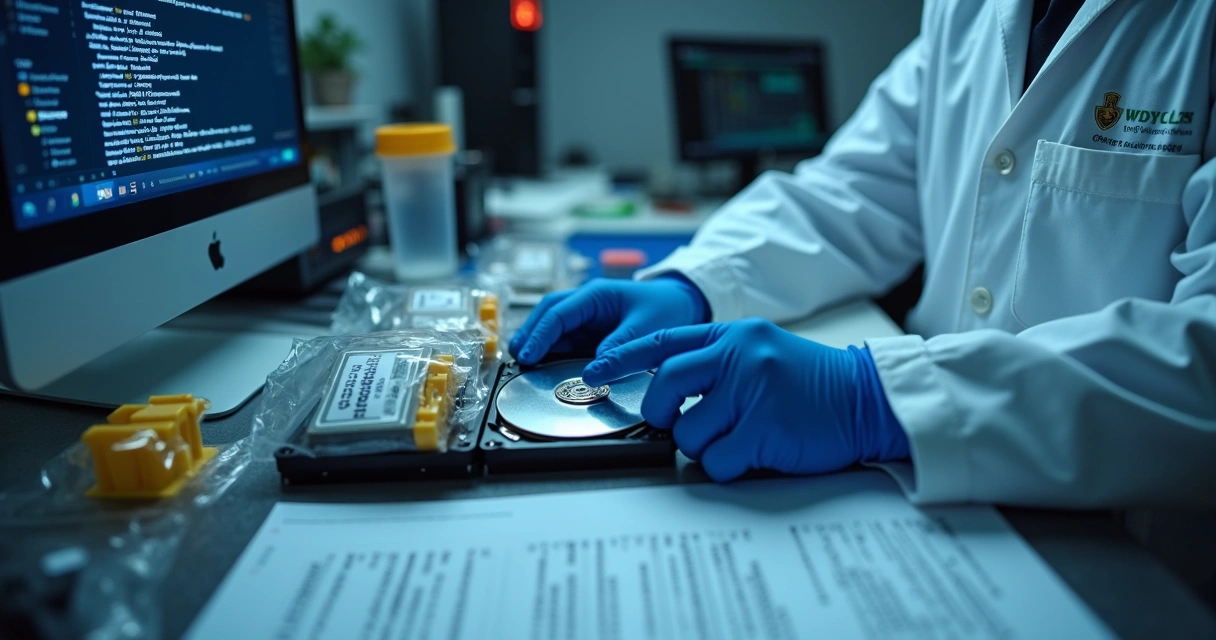
In my career, I’ve seen cases ruined because someone grabbed a file the wrong way, making it hard to prove if it’s authentic. The standards and methods outlined by organizations such as NIST are designed to prevent such mistakes from happening.
3. Analysis: Turning raw data into facts
This is the most painstaking part I’ve seen. Here, digital detectives inspect every byte for signs of unusual or malicious activity. It might involve:
- Recovering deleted files or emails
- Examining log files for odd access patterns
- Reconstructing timelines from file metadata
- Comparing system states before and after incidents
I remember one investigation where a single login failure in a midnight log revealed the entry point for a major ransomware attack in a company. The digital fingerprint didn’t just show how hackers got in, it told us how to stop them next time.
“The story is in the details—every click, every log entry, every packet.”
At this stage, patience and technical know-how are vital. Analysts look for data hidden in unallocated disk space, encrypted containers, or even remnants inside RAM snapshots.
4. Reporting: Communicating findings
After the facts are clear, they must be presented. If you’ve ever read a forensic report, you know it can decide whether evidence stands up in court, or guides an organization’s response to a breach.
- Details on what data was examined and why
- How evidence was preserved and validated
- Findings, conclusions, and their technical basis
- Clear timelines and supporting files
In my experience, reporting isn’t just for lawyers or executives. It protects the integrity of the investigation itself. Clear, honest reports keep everyone aligned and allow lessons from the incident to shape future protections.
Why handling evidence properly matters
Digital evidence is fragile—accidental changes can happen if you type a single character or boot up a suspect’s device the wrong way. Having seen high-stakes trials and insurance cases turn on these points, I can say that only careful handling gives evidence legal weight.
This is why professionals always:
- Use write blockers on storage devices
- Document every action in a “chain of custody” log
- Hash files before and after every transfer
- Keep originals untouched, working only with forensic copies

“Chain of custody” is not just a phrase from TV shows. It is the record that proves evidence was handled correctly, and in my view, it is the backbone of any credible investigation.
Digital forensics in cybercrime and incident response
Why is careful investigation so valuable to organizations today? Take an example drawn from a real conference case study: A large company discovered suspicious outbound traffic from its network over a weekend. Their IT team noticed high CPU usage and files being uploaded to unfamiliar servers. When investigators like myself arrive, our job is to find out:
- Was data actually stolen?
- Which systems were accessed, and by whom?
- How did the attacker get in?
We answer these using data analysis and well-practiced investigation steps. Here’s how our work helps organizations:
Detection and confirmation
Spotting something strange isn’t always enough. I’ve often worked with teams that see a warning in their security software, but aren’t sure if it’s real. With robust investigative processes, we verify incidents quickly—sometimes disproving false alarms before they become company-wide panic.
Containment strategies
When a breach is confirmed, rapid action is the only way to stop it spreading further. Digital investigators help define which systems need to be isolated, which accounts should be suspended, and how to block ongoing attacks. Sometimes just unplugging a network cord is all that’s needed, other times it requires coordinated outages across continents.
I recall one financial firm where swift action limited a breach to one server, avoiding weeks of downtime and data loss. They credited a well-practiced forensics process for their quick response.
Recovery after an incident
Post-incident, digital evidence helps guide teams on what needs restoring and how to make sure old weaknesses stay fixed. Finding the “root cause” is not just about investigating—it is about improving for next time.
For example, a business might rebuild systems using clean backups, strengthen access controls, and train staff to avoid similar phishing attempts. This practical approach is something I discuss during my talks and training sessions as part of the Thiago Vieira project.
“Investigation is not just about solving mysteries—it teaches us how to recover stronger.”
Techniques and tools on the front lines
Tools and methods for inspection have changed dramatically. In workshops and as a consultant, I have seen everything from basic disk cloning kits to sophisticated memory analysis platforms. Let me share what I believe are the most relevant ones today.
Core forensic tools in use
- Disk imaging software: Used to create exact byte-level copies of drives. This prevents changes and preserves all data, even deleted files.
- Write blockers: Hardware tools that prevent a computer from modifying the drive during access, protecting file integrity.
- Memory analysis platforms: Tools that analyze RAM snapshots, revealing traces of malware, passwords, or encryption keys.
- Network analyzers: Applications that capture and dissect network traffic, helping trace conversations with external attackers.
- Mobile forensics suites: Software designed to extract logs, app data, messages, and media from smartphones and tablets.
The role of these tools is not just to gather data, but to ensure it’s reliable for business decisions or legal procedures. According to NIST guidelines, professional use of these tools includes standards for validation and documentation.
Forensic methods for mobile and network analysis
Mobile devices now contain more personal and organizational data than many people realize. Recovering information from phones involves:
- Extracting deleted text messages and call logs
- Copying app data, such as chat histories or payment records
- Unlocking and imaging devices without altering original content

For network investigations, packet capture and inspection tools are invaluable. They let analysts reconstruct sessions, map data flows, and spot unusual traffic patterns—sometimes pinning down an attacker’s online movements in precise detail.
I remember a scenario where analyzing a single packet stream revealed the command-and-control activity of malware before it began deleting evidence of its own presence. That’s why these methods make a real difference.
Legal and privacy factors in digital evidence
Every time I prepare a presentation for industry leaders, legal risks and privacy always become hot topics. Investigators face challenges balancing the need to uncover the truth with laws that protect personal data or organizational secrets.
In my experience, common legal issues include:
- Adhering to data protection regulations (like GDPR)
- Following court-ordered procedures for evidence gathering
- Ensuring employee or user privacy rights aren’t violated
- Documenting every investigative action for legal review
Privacy risks increase with the growing use of mobile devices, cloud apps, and remote work setups. This makes transparency, professional conduct, and data minimization more important than ever before. Failing to respect these boundaries can lead to lawsuits, evidence being dismissed, or lasting damage to a company’s reputation.
Specialists in digital forensics: Who does this work?
During conference panels, I often describe a digital investigator not as a lone technician, but as a blend of detective and scientist. They need technical knowledge, curiosity, and a strong sense of ethics.
Essential skills for this role include:
- Deep understanding of operating systems, file systems, and networks
- Experience with the core tools mentioned above
- Awareness of legal, regulatory, and organizational policies
- Ability to document and communicate findings clearly

“The best digital investigators never stop learning—every new device, every attack, every legal challenge brings something unexpected.”
Besides technical skills, emotional resilience is also a must. Many cases are urgent and involve confidential or sensitive information. Handling pressure without missing details is something I’ve seen only experienced professionals manage well.
Current challenges for digital investigators
I have noticed how much more complicated digital investigations have become, even in the last year or two. Today, every device at home or work can generate evidence. Additionally, these are the new hurdles I find most pressing for experts like me:
- Explosion of cloud and remote data: Evidence is now scattered across cloud platforms, personal devices, and servers worldwide. Gathering and securing it takes global cooperation.
- Encryption everywhere: Strong encryption protects privacy but can also block legitimate investigations. Sometimes an entire inquiry halts because no one has the keys.
- Huge volumes of raw data: Sifting through terabytes to find a single clue tests both tools and patience.
- Constantly changing technologies: New operating systems, file formats, or mobile apps mean investigators need ongoing training.
- Legal barriers: Jurisdictional issues, especially with international cloud storage, can prevent access even when evidence is available.
Despite these barriers, the field continues to innovate, driven by the high costs of cybercrime, as shown by data from USAFacts.
Scenarios: How real-world incidents are unraveled
I find that the best way to understand this field is through real cases—nothing is more powerful than seeing how a skilled team uncovers the facts. Let me share a few examples based on real scenarios (with details changed to respect privacy):
Case: Ransomware hits a regional hospital
A patient scheduling system suddenly locks out staff, displaying a ransom note. The hospital realizes backups were also erased. As investigators, my team and I:
- Collect logs from every server, backup, and workstation
- Find phishing emails delivered to staff three days before
- Recover deleted admin logs showing when ransomware was installed
- Prepare the evidence for reporting to management, regulators, and law enforcement
This case led to new email protections, user training, and routine system imaging.
Case: Insider data theft at a tech startup
A departing employee is suspected of stealing product code. Forensic steps included:
- Imaging laptop and cloud storage
- Examining USB device usage and deleted files
- Linking copied files timestamps to external accounts
- Coordinating findings with legal counsel and HR
This resulted in policy updates and fresh access controls company-wide.

Case: Large e-commerce breach investigation
A customer database leaks online, and customers report fraudulent charges. Through digital analysis, experts:
- Trace network logs to pinpoint breach window
- Identify malicious SQL injection in server logs
- Collaborate with law enforcement to understand external attacker’s process
- Help organization shape post-breach communication and restitution steps
Each of these investigations doesn’t just solve a mystery—it builds resilience and helps recovery. These kinds of stories are a core topic of my conference presentations and blog posts (like those you’ll find at my resource library).
How digital forensics supports organizations today
The need for careful investigation is greater now than ever. Threats are more advanced, but so are the investigation strategies and tools. When I discuss cyber resilience with organizations and at events, I emphasize several points where digital forensics changes the outcome after an attack:
- Speeds up breach detection and reduces business downtime
- Prevents repeat attacks by identifying and fixing root causes
- Supports compliance with industry regulations
- Provides clear evidence in legal proceedings and insurance claims
- Restores stakeholder trust after a publicized breach
I also believe that organizations gain from raising awareness with regular training and by having forensic-readiness plans—a concept I highlight in articles like those found in my organizational security guidance. Establishing internal protocols and working relationships with specialized investigators is as much about education as it is about tools.
For me, the core of this discipline remains unchanged: finding the facts, safely and clearly, so organizations and people can move forward after digital incidents.
Conclusion
While cyberattacks continue to rise and technology keeps changing, digital investigation remains our most reliable way to answer hard questions after a breach. Whether it’s a missing file, a stolen password, or an entire network being held hostage, digital evidence is at the heart of recovery and justice.
Through my journey—training specialists, speaking at international events, and consulting on complex cases—I have seen that success comes down to process, skill, and constant vigilance. Respecting privacy, maintaining detailed records, and improving readiness put organizations in the strongest position to respond and recover.
This approach is at the core of the Thiago Vieira project, where I continue to share knowledge to help people and organizations stay safe and confident in the digital world. If you would like to deepen your understanding, be better prepared, or learn from real-world cases, I invite you to explore more resources and connect with like-minded professionals. Your next step starts with awareness, and together we can all contribute to safer digital environments.
Frequently asked questions
What is digital forensics?
Digital forensics is the methodical process of uncovering, preserving, and analyzing digital information to investigate cyber incidents, resolve disputes, or support legal actions. It covers everything from analyzing emails and system logs to recovering deleted files and detecting how security breaches happen. Its purpose is to provide clear answers—who did what, when, and how—using technical expertise and strict procedural standards.
How does digital forensics work?
Investigators follow a step-by-step process that starts with identifying potential sources of digital evidence, collecting them securely, and then analyzing this information for clues or proof. This work relies on specialized tools, careful documentation to avoid tampering, and structured reports that explain what was found. Each investigation adapts to the specific case but keeps evidence integrity and privacy as top priorities throughout.
What tools are used in digital forensics?
The most common tools include disk imaging software (to create exact copies of storage devices), hardware write blockers, memory and network analyzers, and mobile forensics suites. These help experts recover deleted data, inspect file changes, reconstruct timelines, and analyze network traffic. All tools must be validated to ensure their results can be trusted in technical and legal reviews.
How can I start a career in digital forensics?
Getting started requires a foundation in IT, computer science, or cybersecurity, paired with ongoing training in forensic tools and investigative methods. Many professionals begin by studying digital investigations, volunteering in IT roles, or attending security events and courses. Certifications and hands-on labs also help build credibility. Curiosity, attention to detail, and a commitment to ethics are just as important as technical skills in this field.
Why is digital forensics important in cybercrime?
It allows investigators to find out exactly how incidents occurred, who was affected, and what course of action to take next. Without it, blame is uncertain, attackers are harder to catch, and organizations struggle to recover. By preserving evidence and clarifying the scope and impact of cyber incidents, digital investigation gives decision-makers—and courts—the confidence to act on reliable information and make communities safer.