
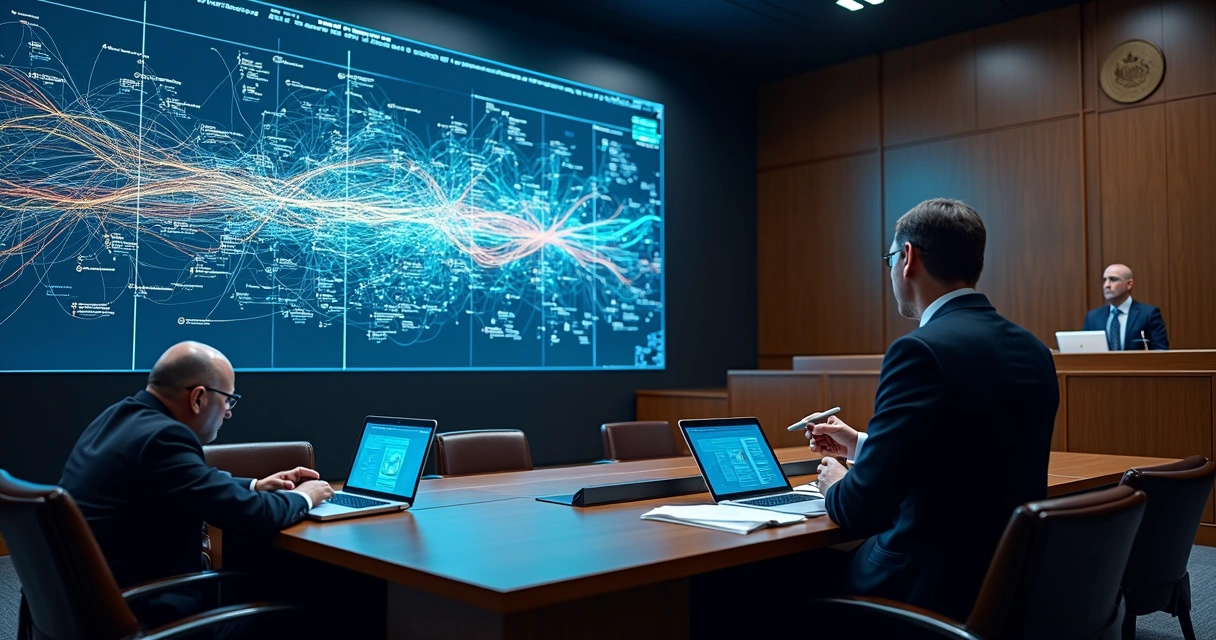
Cryptocurrency has changed the way people move money across the globe. Yet, as I have seen in my years of speaking and consulting on digital forensics, these changes bring new risks and new ways to hide financial crime. Today, one of the most critical challenges is identifying and tracing cryptocurrency laundering, particularly as tactics grow more sophisticated and the monetary stakes grow. In this article, I want to share a real-world example from 2026—the $1M USDT multi-phase laundering scheme on the TRON network. I'll break down the forensic techniques that help uncover such crimes, explore how pseudonymity and exchanges change the game, and explain why timing really matters in legal investigations. My focus is to help digital forensics professionals, cybersecurity investigators, and legal teams understand why blockchain forensics matters so much now.
The puzzle of crypto laundering in 2026
In 2026, I've noticed that crypto laundering operations are no longer crude. Schemes involve layers of quick transfers, complex splitting and merging of funds, and smart use of decentralized finance. One case that caught my attention involved a criminal ring attempting to launder a stolen $1 million USDT on the TRON network in several phases. By sharing how this worked, I hope to show what modern blockchain forensic work looks like.
The TRON blockchain, like other public ledgers, records every transaction. But unlike the early days, criminals today do not simply transfer assets to one address and cash out. Instead, they:
- Break up funds into hundreds of smaller amounts (known as “smurfing”)
- Route through new addresses created just for the crime
- Move assets across blockchains
- Leverage decentralized exchanges (DEXs) to further fragment the trail
Tracing these funds demands a mix of technology, knowledge, and timing. The next sections will show how this case unfolded and the tools used to chase every digital clue.
How forensic methods untangle the trail
When I work on these cases or guide others through them during my presentations (find more insights here), there are several powerful methods for following funds on-chain. The TRON case used a combination of:
Temporal correlation: Linking activity by time
One of the first red flags in laundering is a sudden burst of activity after a large theft. In the 2026 case, the stolen USDT quickly moved through dozens of accounts in minutes. By mapping these transfers on a timeline, block by block, patterns emerge that point to orchestrated “washing” instead of random use.
Money laundering moves fast—so must your investigation.
Temporal analysis connects otherwise unrelated addresses that act within seconds or minutes of each other, suggesting one controlling entity behind many wallets.
Value propagation: Seeing how money splits and merges
After the initial split, I watched as the $1M fractured into hundreds of fragments, each moving independently. With value propagation tracking, forensic tools follow each fragment as it winds through mergers, swaps, and secondary splits. If multiple fragments later recombine at one or two key addresses, this can reveal attempts to “clean” the funds and prepare for withdrawal or trade.
Tracking these threads is painstaking work, but the picture builds. In this case, value analysis eventually isolated three addresses where roughly half the stolen amount merged, suggesting the laundering’s next phase.
Co-occurrence mapping: Uncovering subtle patterns
Co-occurrence mapping, in my experience, is often the clincher. This method looks for repeating transaction patterns—such as addresses that always act together, fees that are consistently set, or timing that hints at automated scripts. For the TRON laundering ring, I found that certain wallets received and sent funds mere milliseconds apart, always in the same ratio and sequence, despite never interacting before. Such statistical oddities rarely happen by chance.
Patterns that repeat are a signal. In blockchain forensics, they often tell the story no one wants revealed.
Pseudonymity versus anonymity: The big misconception
It's common to hear, both in cybercrime myths and even in news reports, that cryptocurrency is “anonymous” money. This is not true.
Cryptocurrency is pseudonymous, not anonymous. Each account is known by an address, not by a person's name or passport number. But because all transactions are public, once one address is matched to a real identity (perhaps through a court order to an exchange, or a slip-up by the user), every transaction connected to that address can in principle be tracked.
In the TRON case, investigators found that several of the “cleaning pools”—where fragments of the stolen USDT merged—were connected to exchange deposit addresses. This led to the next step.
Exchanges as weak links: How KYC can break laundering chains
Most regulated central exchanges now require KYC (Know Your Customer) checks. This means anyone withdrawing or converting crypto at a certain scale must provide identity documents. Forensic investigations like the one I watched unfold in 2026 often hinge on intercepting laundered funds at this final stage.
Risk-takers might attempt to cash out without KYC, using unregulated exchanges or peer-to-peer trades, but volume limits and time lag make this tough for very large thefts. Sooner or later, to actually extract stolen money at scale, someone needs to step through a gate where KYC applies.
When legal teams act fast and issue preservation or information requests, as I've emphasized in my presentations and detailed in recent articles, exchanges can freeze or monitor the account. In the TRON case, rapid notice to a compliant exchange helped preserve a significant portion of the funds before the launderers could convert them to cash or other assets.
Why timing and legal strategy matter
I often stress the need for swift action in digital investigations. When digital evidence is fleeting—especially with crypto—timing is everything. Legal preservation requests made early can stop funds before they vanish deeper into the digital wild.
For forensic professionals, the steps are:
- Monitor the blockchain in real-time, setting automated alerts for suspicious splitting, merging, or exchange transactions.
- Coordinate quickly with legal counsel to issue preservation or freezing orders to exchanges.
- Document every discovery, from first abnormal transaction to final cash-out attempt.
- Never assume recovered funds are the end. Continue watching, as criminals sometimes test with small amounts, then return for more.
Missed hours, not just missed days, can lose the trail forever. The lessons of 2026, and the TRON case, remain strong ones for anyone investigating or prosecuting crypto crime.
From theory to practice: Building resilience in digital security
Events like this highlight not only the skills needed to track digital money, but also the need for broader digital resilience. When I meet companies or professionals at conferences or private briefings, I see how practical, up-to-date forensics knowledge can prevent losses and support faster investigations. Digital forensics is not just about recovery, but about preparing people and organizations to act quickly and confidently.
For anyone interested in going deeper, you can search related topics or recent cases through my knowledge base. Staying updated and understanding the tools and strategies used in modern crypto forensics is my key recommendation for digital forensic teams, lawyers, and investigators.
Conclusion: The future of crypto forensics calls for constant learning
The $1M USDT TRON laundering case is only one example of how complex and high-stakes blockchain money laundering schemes have become. With the right forensic techniques—temporal correlation, value propagation, co-occurrence mapping—and proper legal and technical strategy, professionals can still find the needles in the digital haystack. Every new scheme brings new lessons. The rapid pace of blockchain change means that what I share in my presentations and writings must always evolve, too.
If you want to build digital resilience for yourself or your organization, understand real threat scenarios, or learn more about my approach to practical cyber defense, discover more about my talks and insights at Thiago Vieira's profile. Real security starts with real knowledge.
Frequently asked questions
What is blockchain forensics?
Blockchain forensics is the process of examining and interpreting transaction data recorded on blockchains to uncover, trace, and analyze cryptocurrency activities that may be linked to fraud, theft, or laundering. In practice, it combines digital investigation skills, technical tools, and sometimes legal cooperation to follow the movement of funds and associate them with suspicious or criminal activity.
How does crypto laundering work?
Crypto laundering involves moving illicit or stolen cryptocurrency through a complex series of transactions, new addresses, and sometimes multiple blockchains or exchanges to disguise its origin and make it appear legitimate. This often includes breaking funds into smaller amounts, rapid transfers, and attempting to merge them at “clean” accounts, usually for withdrawal through exchange platforms.
How can I trace stolen crypto?
Start by analyzing transaction records on the relevant blockchain using public explorers or forensic tools. Look for patterns such as sudden splits, merges, or transfers to known exchange addresses. Combine temporal, value, and co-occurrence analyses. Where necessary, seek legal cooperation from exchanges to identify individuals behind suspicious activity. For more practical strategies, you can review articles in my knowledge base.
Are blockchain forensics tools expensive?
Costs vary widely. Some public blockchain explorers are free, but advanced analytics or commercial solutions can be costly, depending on features like real-time monitoring, deep address clustering, or integration with legal tools. For individuals or small teams, some open-source tools can be a good starting point, but larger investigations may need professional software and expertise.
Is blockchain forensics worth learning?
If you are a digital investigator, cybersecurity professional, or legal advisor dealing with cryptocurrency, learning blockchain forensics is highly valuable. As digital currency becomes widespread, these skills will only grow in demand. Understanding how to find and interpret on-chain evidence can make the difference in both preventing and responding to digital financial crime.