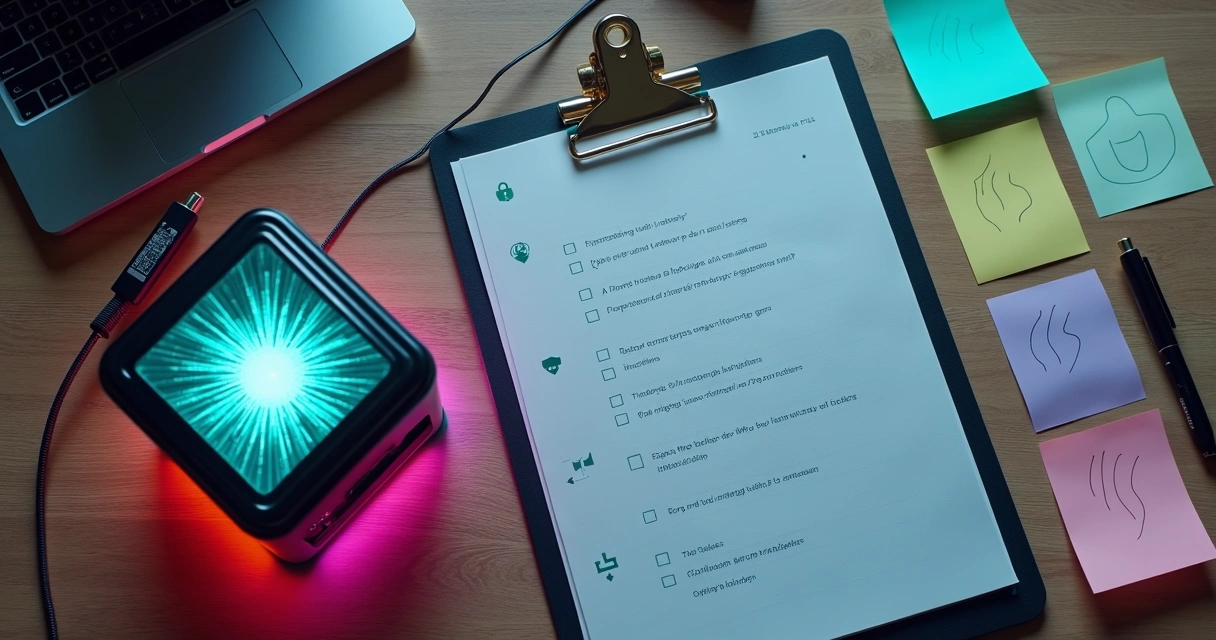
In all the years I have been speaking and consulting in cyber defense, few things grab my attention like the push for security in modern digital systems. Just last month, during one of my talks, a young developer asked me, “How do we make sure our vibe-coded systems do not fall apart?” His question stuck with me. So today, I want to share the safety checklist I use and recommend for anyone working with vibe-coded platforms.
Security doesn’t wait for a crisis—it demands daily action.
A checklist helps bring order, focus, and confidence, especially when time is short or pressure is high. From my experience, following a clear list is better than remembering hundreds of details on the fly. This approach is core in the work I present as a cybersecurity speaker, like in the project of Thiago Vieira.
Why vibe-coded systems have unique risks
Vibe-coded systems, often built for fluid collaboration or real-time digital operations, can inherit certain risks. Their structure can sometimes prioritize convenience, leaving cracks where attackers slip in. During international events I attended, I noted how fast these platforms scale—and how security often fights to keep up.
Last year, forensic work I performed revealed most breaches could have been fended off if only simple checks had been followed.That’s why I built and refined a simple yet robust 23 item checklist, fine-tuned for these dynamic settings.
The 23 items safety checklist for vibe-coded systems
Follow this list step by step, updating often as your system grows and changes.
Critical
- Authentication and session management implemented correctly — tokens expire, logout invalidates the session
- Passwords hashed with bcrypt or argon2 — never plain SHA-256 or MD5
- No credentials or API keys in code or repository — use environment variables
- Authorization checked on every route/endpoint — not only in the frontend
- User input never executed as code — SQL injection, command injection, eval
High
- Path traversal blocked — use
os.path.basename()or equivalent when handling files - Domain/URL validation with RFC regex or allowlist — never a blacklist
- CSRF protection on all state-changing forms — tokens or SameSite cookie
- XSS — user-supplied data properly escaped before rendering HTML
- HTTPS enforced on all routes — cookies set with Secure + HttpOnly
- File uploads — type validation, maximum size limit, storage outside the webroot
Medium
- Generic error messages shown to users — never expose stack traces, paths, or version numbers
- Rate limiting on login, registration, and public API endpoints
- Pagination with hard maximum limits on all queries — no unbounded loops or offsets
- Third-party API keys passed as parameters or headers — never embedded in the URL
- Dependencies free of known vulnerabilities — npm audit / pip-audit / Dependabot enabled
- CORS configured with an explicit allowlist — no wildcard
*in production - Logs contain no sensitive data — no passwords, tokens, or PII
Low
- Retry logic uses exponential backoff with a maximum timeout — no infinite sleep
- Size limits enforced on text fields, lists, and network ports
- Tokens and secrets in logs replaced with
type(e).__name__or[REDACTED] - Security headers configured — CSP, X-Frame-Options, Referrer-Policy
- AI-generated code reviewed by a human before deployment — vibe-coded output is a starting point, not a finished security posture
Every skipped step is a door left open.
Putting the checklist to the test: A story from the field
I once reviewed a fast-growing creative startup using a new vibe-coded stack. Their growth was impressive. But when I asked to see their device inventory, the list was weeks out of date. “We keep meaning to update it,” their IT lead told me. Within hours, we found an abandoned developer laptop still connected, with credentials that had not been changed since an intern left. It was the weak link.
That day, we ran through every item on this checklist. The improvements were seen in days, not weeks, and their sense of control returned. That’s why I keep this list close—not just for audits, but as a regular discipline. It is the kind of approach I share in my roles as a consultant and speaker, contributing to a safer digital landscape for all participants.
How to keep your checklist up to date
When I look back, one common thread in all successful vibe-coded deployments is regular review. Mark recurring dates to review this checklist. Connect each task to a responsible person. And document what changes from one check to the next, so you can spot risk trends early.
Many teams forget to record lessons learned after an incident. I suggest adding a simple note on your checklist for “Insights from incidents”—a single sentence can be enough.
If you want deeper insight into digital risks or see real scenarios where items like these prevented bigger disasters, you can read more in my posts on building resilient digital operations and incident response lessons on my blog.
Empowering your team and building a safety culture
If there’s one thing I have learned through speaking at conferences and leading workshops, it is that safety is never “done.” It’s a moving target—and the best teams treat this checklist as a core ritual, not a one-time event.
Share progress and setbacks openly. Encourage your team to suggest changes. This way, you’re watching for risk together, and acting as one, like I discuss inmy story-driven security case studies.
Conclusion
A checklist, when done right, builds not just security but trust. It’s a way to show your clients, your organization, and yourself that you care about every detail that matters.
No organization is too small or too busy to apply steady, focused discipline in digital safety.If you are ready to make security a habit in your own work, connect with me or browse more resources at Meet Thiago Vieira or search for topics such as “resilience” or “incident response” at Thiago Vieira’s blog search. It’s time to turn these checks into your routine and strengthen your digital world today.
Frequently asked questions
What is a vibe-coded system?
A vibe-coded system is a type of digital platform or infrastructure designed to adapt quickly to user needs, often used for collaborative or real-time interactions. In my research and talks with digital teams, I’ve seen these systems stand out for their fluid user experience, often built with rapid changes and flexible integrations in mind.
How does the safety checklist work?
The safety checklist works as a step-by-step guide to identify, prevent, and respond to risks in vibe-coded systems.I recommend going through each item one by one, marking your status, and documenting any gaps so you can address them in your next cycle.
Why use a safety checklist for vibe-coded systems?
Using a safety checklist helps keep security tasks clear and focused. I believe that, especially in fast-paced, flexible platforms, having an organized list prevents common mistakes and helps teams act before a threat becomes a real problem.
What items are on the safety checklist?
There are 23 items, including device tracking, strong authentication, permission checks, network controls, data backups, user training, constant software updates, and regular incident response reviews. Each step is designed to address typical vulnerabilities I’ve seen firsthand in this kind of system.
How often should I review the checklist?
Review the checklist every time your system changes, at least once a quarter, and after any security event.From my experience, more frequent reviews keep your defenses current and stop issues from growing quietly in the background.